
During what was intended to be a quiet live broadcast about the upcoming 2026 Formula 1 season, the studio atmosphere suddenly shifted into a charged and tense confrontation. The main characters were none other than Formula 1 world champion Max Verstappen and climate activist Greta Thunberg . What began as a casual conversation about training, motivation, and mental pressure unexpectedly evolved into a discussion about activism, responsibility, and the role of elite athletes in social campaigns.
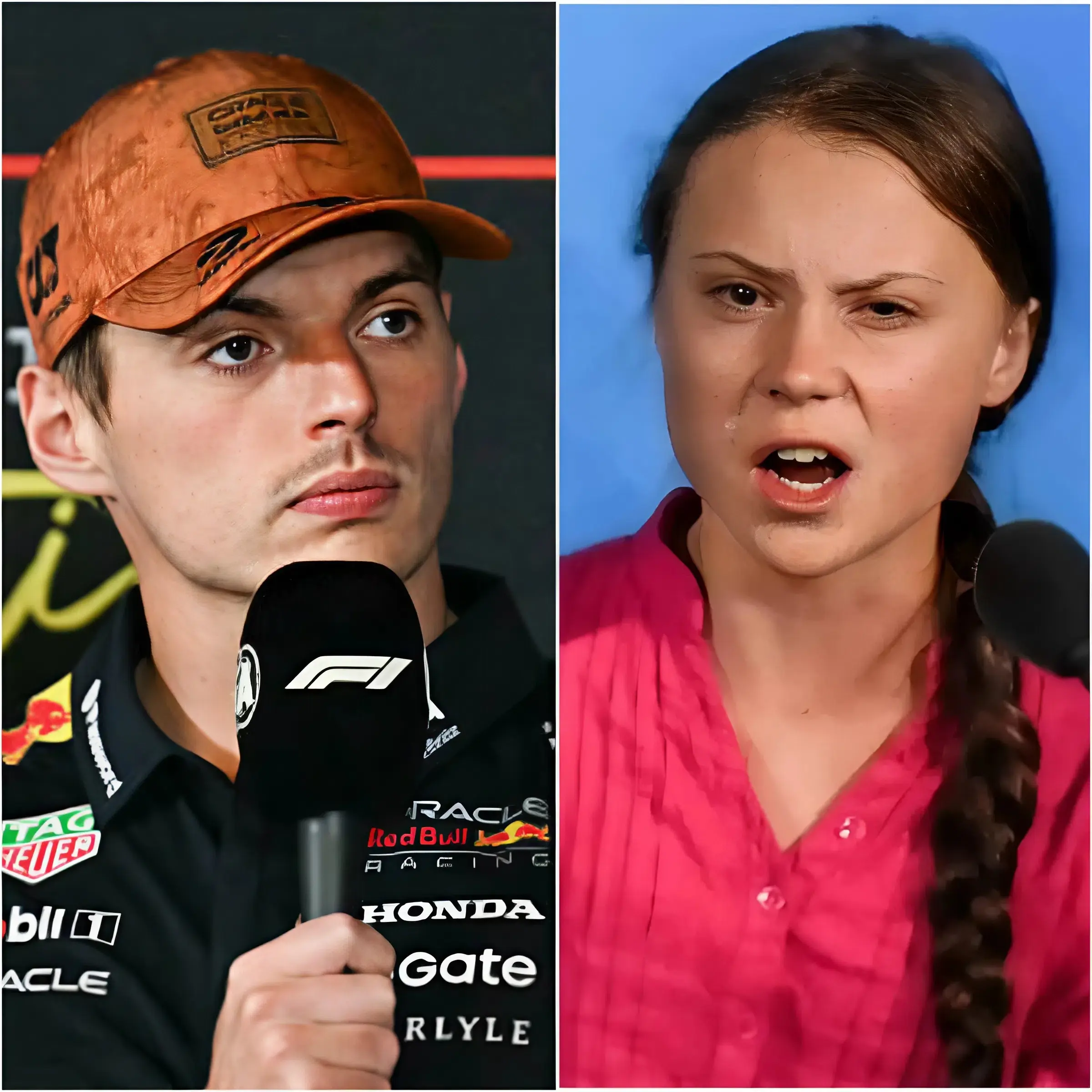
The broadcast began with an interview in which Verstappen discussed his preparation for the new season, the changes to the car, and his team’s expectations. He emphasized the importance of focus and discipline, and his desire to continue his career at the highest level for as long as possible. The audience listened attentively, and the atmosphere in the studio was relaxed.
That changed when Thunberg was brought in via a live broadcast to present her new international campaign. This campaign combined themes such as climate awareness, social inclusion, and support for the LGBTQ+ community within the sports world. She argued that major sports icons should use their influence to drive social change.
After a few minutes, she addressed Verstappen directly. In a sharp and emotional tone, she stated that his refusal to join her campaign was “a betrayal of the future.” She used the word “traitor” and declared that silence or neutrality, in her view, amounts to supporting the old system that, in her view, is harming the planet.
An awkward silence fell in the studio. The presenter tried to interject briefly, but Thunberg continued her speech. She spoke of the responsibility of famous athletes, of the millions of young people who look up to them, and of the danger of what she called “moral cowardice.” Her words were fierce, and the tension was visible on the faces of both the presenter and the audience.
Verstappen remained remarkably calm. He listened without interrupting, his posture upright, his gaze focused. Cameras zoomed in on his face, which showed no anger or irritation, but rather concentration. When Thunberg had made her point and paused, he spoke.
His response was brief, cool, and controlled. In just ten words, he made it clear that he respects everyone, but that he won’t be pressured into political or social campaigns. He emphasized that his primary duty is to race, represent his team, and practice his sport as professionally as possible.
Those few words had an unexpectedly profound effect. Thunberg visibly leaned back in her chair, as if she hadn’t anticipated such a calm and direct response. The studio held its breath for a moment. Then the audience erupted in applause. Not for the activist, but for the racing driver who had managed to defuse a heated exchange without raising his voice or attacking anyone personally.
Within minutes, the clip spread across social media. On platforms like X, Instagram and TikTok, the moment was shared en masse. Some praised Verstappen for his self-control and called him an example of how to deal with pressure and public attacks. Others criticized him for missing an opportunity to speak out for an important social cause.

Sports analysts pointed out that Verstappen has been known for years for his direct, down-to-earth demeanor. He rarely speaks about politics and deliberately avoids activist statements. According to them, his reaction is entirely in keeping with his personality: focused on performance, not on public campaigning.
On the other hand, Thunberg’s supporters emphasized that her role is simply to push people out of their comfort zones. They felt the confrontation was necessary to spark a debate about the influence of athletes. For them, it wasn’t an attack on Verstappen as a person, but a symbolic moment demonstrating the difficulty of connecting sports and activism.
Media experts also criticized the role of the television producers. Some suspected that the meeting was deliberately staged to create tension and boost ratings. Bringing a top athlete and an outspoken activist together on a live broadcast without clear agreements about the content would almost inevitably lead to conflict, they argued.
Yet others saw the value of these kinds of conversations. They argued that television should be a platform for diverse opinions and that confrontation is sometimes necessary to make social issues visible. In that sense, the moment wasn’t seen as a failure, but as a reflection of the current era, in which sports, politics, and media are increasingly intertwined.
In the days following the broadcast, Verstappen remained in the background. He gave no interviews about the incident and focused on his training. His team stated only that he remains focused on his sporting goals. Thunberg, meanwhile, continued to speak about the importance of public involvement, but did not mention Verstappen by name again.
For many viewers, this moment became a lesson in self-control. In an era when arguments often degenerate into shouting and insults, it was striking how a few calm words could defuse the situation. It wasn’t a victory of one side over the other, but an example of how to remain steadfast without aggression.

The incident demonstrated the immense pressure modern sports heroes face. They are judged not only on their performance but also on their moral choices. Some embrace this role, others reject it. Both attitudes provoke strong reactions.
What ultimately remains from that evening isn’t so much the accusation, but the silence that followed and the applause that followed. A moment when a heated debate turned into a lesson in calm and respect. Whether one agrees with Verstappen or Thunberg, the broadcast showed how powerful words can be when spoken with restraint.
Thus, a typical sports interview unexpectedly became a symbol of a larger debate: the question of whether sport should remain neutral or, rather, serve as a platform for social change. And one thing was central to that debate: the way a top athlete, under immense media pressure, chose to remain calm and maintain their boundaries.