
Sera, a 22-year-old waitress in a small restaurant on the outskirts of town, had no idea that the quiet man she was serving that evening was actually Max Verstappen, the famous Formula 1 world champion. Dressed in simple clothes, with a cap pulled low over his face, he looked like any other customer just wanting to eat in peace.
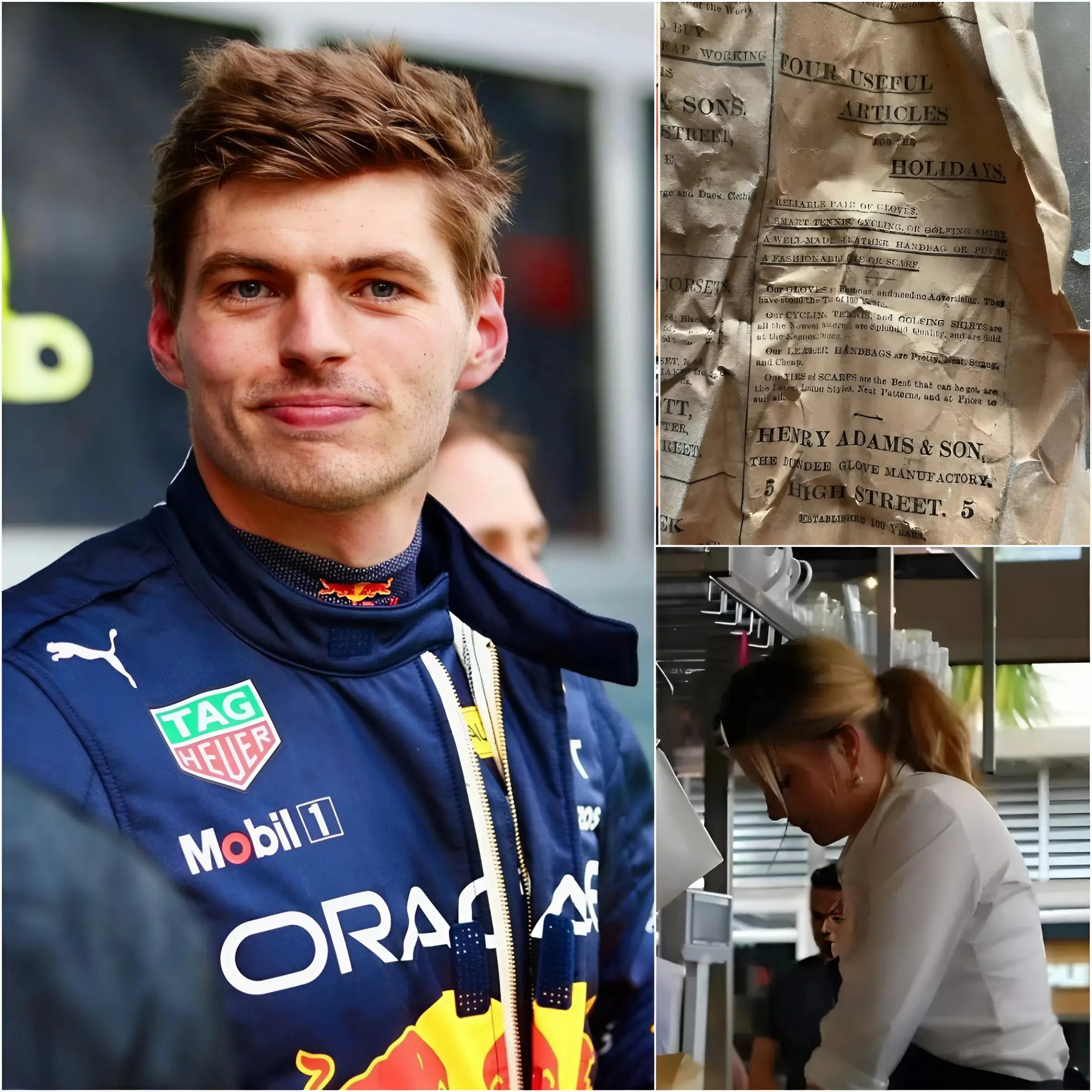
For Sera, it was a typical work night. The restaurant was half full, soft music played in the background, and the aroma of freshly prepared food hung in the air. When she walked over to the table to take her order, she noticed the man was polite and reserved. He spoke softly, smiled kindly, and ordered a simple dish. No cameras, no fans, no entourage. Just a man visibly enjoying a moment away from the attention.
What Sera didn’t know was that Max Verstappen had deliberately chosen this spot. After weeks of races, interviews, and global attention, he longed for something most people take for granted: anonymity. A quiet meal without applause, without flashing cameras, and without expectations.
During dinner, Sera noticed that the man barely glanced at his phone. He sat quietly staring into space, sometimes looking out the window, sometimes at his plate. Every time she came by to ask if everything was alright, he thanked her sincerely. His demeanor was modest, almost shy.
At one point, Sera asked, “Is everything alright?” He smiled and replied, “Yes, thank you. It’s nice to be able to sit quietly for a while.”
Those simple words stuck with her, without her understanding why.
When it was time to leave, he asked for the bill. Sera brought it and wished him a pleasant evening. The man stood up, straightened his coat, and headed for the exit. But just before leaving, he turned around one last time, walked back to the table, and placed a neatly folded note next to the bill. He looked at Sera, smiled kindly, and said, “Thank you. Have a pleasant evening.”
Then he disappeared through the door.
A few minutes later, Sera walked over to the table to clear it. She wasn’t expecting anything special: perhaps a standard tip and a hastily written “thank you.” But when she unfolded the note, her hand began to shake.
On the note was written:
“Thank you for treating me like a normal person tonight. Your kindness means more than you think. Keep believing in yourself.” — Max Verstappen
Beneath the message was a tip far larger than any she had ever received before.
Her eyes filled with tears.
She stood motionless for a few seconds, in the middle of the restaurant. Sera had been struggling these past few months. She worked long hours, helped her family financially, and doubted whether her dreams of returning to school would ever come true. She often felt invisible. And now, there was a message from someone she hadn’t even recognized, but who touched her at just the right moment.
A colleague noticed her tears and came over. “Are you okay?” she asked worriedly.

Sera showed her the note. The colleague clapped her hand over her mouth. “Do you know who that was?” she whispered. Sera shook her head. “That was Max Verstappen.”
The realization came as a shock. The quiet man at the table, the friendly smile, the simple meal—he was one of the most famous athletes in the world. And she had treated him like any other customer.
The story quickly spread among the staff and was later shared on social media by a friend of Sera’s. Within hours, thousands of people responded. Fans praised Verstappen for his humility and humanity.
“This is what a true champion is,” one person wrote. “No show, no cameras, just pure gesture,” said another.
For Sera, the moment meant much more than online attention. In an interview with a local newspaper, she later said: “I didn’t know who he was. I was just being friendly because that’s my job. But that note made me feel seen. That I mattered.”
With the tip, Sera was able to pay off some outstanding bills and enroll in a course she’d been putting off for months. But most importantly, she felt a shift in her self-confidence. She began to believe again that her life wasn’t stuck in one place.
Max Verstappen was also asked about the incident later. He responded modestly. “She treated me like a normal person,” he said. “That doesn’t happen often. I wanted to thank her for that. Sometimes we forget how powerful kindness can be.”
In a sports world often revolving around numbers, titles, and rivalries, this story was striking in its simplicity. No big press conference, no publicity. Just a quiet evening, a note, and a young girl who found hope again.

Psychologists say such stories resonate with people because they show how small moments can change lives. Sera didn’t do anything special: she didn’t ask for an autograph, she didn’t take a photo, she didn’t seek attention. She was simply friendly. And that was enough.
Today, Sera keeps the note in her wallet. She reads it whenever she feels uncertain or afraid of the future. “It reminds me that even an ordinary day can become something special,” she says.
Max Verstappen never officially returned to the restaurant. No cameras, no replay of the moment. Only a memory that will stay with Sera forever.
Sometimes the most beautiful stories aren’t born in huge stadiums full of cheering fans, but in small restaurants, on ordinary evenings. When humility and kindness collide, and two lives intersect without knowing how important that moment will be.
For Sera, it wasn’t the night she waited on a Formula 1 champion. It was the night a new chapter in her life began.