
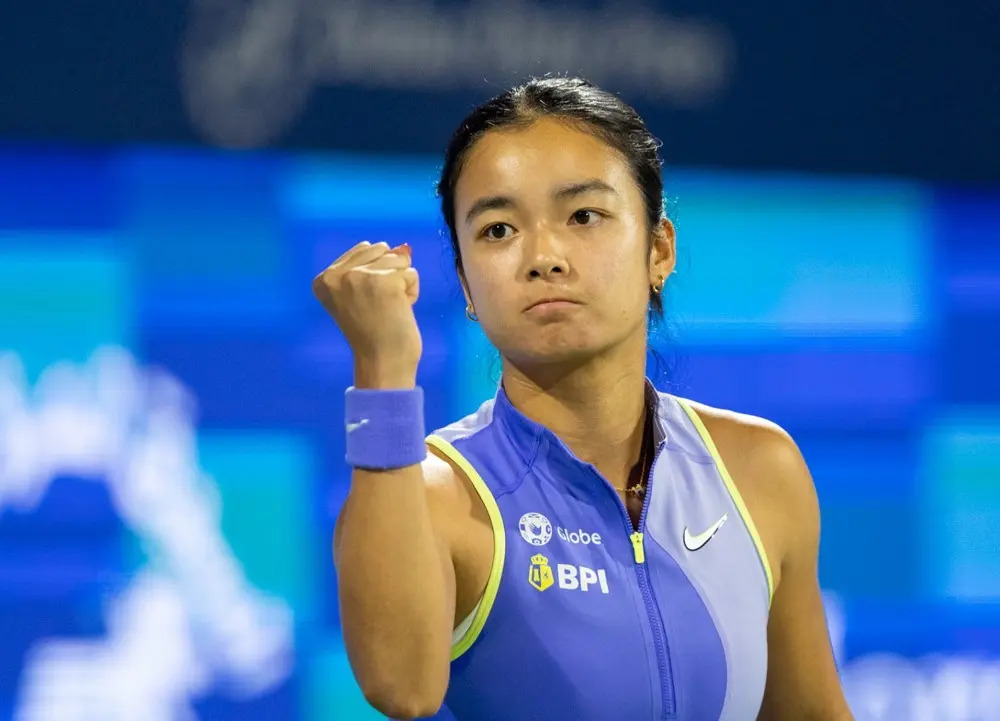
Just five minutes ago, the Philippine sporting world was shaken by an extraordinary announcement at the headquarters of Philippine Tennis Association in Manila. In a surprise press conference, federation president Eric Olivarez unveiled a historic decision centered on the nation’s brightest tennis star, Alexandra Eala.
With cameras flashing and reporters crowding the room, Olivarez delivered his message with visible emotion. He described Eala as more than a champion athlete, calling her “a symbol of resilience and exceptional talent for the world.” His words signaled a turning point not only for Philippine tennis, but for Southeast Asian sport.
The dramatic announcement follows weeks of tension surrounding controversy at the Dubai Tennis Championships. Although no official ruling has been released by the Women’s Tennis Association, debates over officiating decisions placed Eala at the center of international headlines and intense scrutiny.
Rather than allowing the narrative to be defined by controversy, PHILTA chose to respond with overwhelming support. Olivarez declared that Eala would receive a lifetime sponsorship package worth five million US dollars, funded through the federation’s elite development program and leading corporate partners. The room reportedly fell silent.
The financial commitment—equivalent to roughly 280 billion Vietnamese dong—marks the largest career-long sponsorship ever granted to a Filipino athlete in any sport. According to PHILTA officials, the package guarantees complete backing from 2026 until Eala’s eventual retirement from professional tennis.
The sponsorship extends far beyond prize bonuses. It includes a top-tier personal trainer, international travel expenses, world-class equipment, and comprehensive medical funding. Insiders confirm that such institutional support has never before been formalized at this scale in Philippine sports history.

Major contributors include long-time tennis patron Cebuana Lhuillier alongside several undisclosed corporate partners. Their collaboration demonstrates growing confidence in Eala’s global marketability and long-term competitive prospects on the WTA Tour.
Yet the financial pledge was only half of the bombshell. Olivarez then announced the creation of an entirely new honorary role: “Alexandra Eala National Tennis Ambassador for Life.” The title will officially come into effect in 2026, reshaping how the nation formally recognizes sporting excellence.
Under this unprecedented designation, Eala will hold the lifetime right to represent the Philippines at major international tennis events without re-election or reappointment. A special honorary badge, approved by the office of the President of the Philippines, will accompany the title.
The award ceremony is expected to take place during the upcoming Philippine Women’s Open, promising an emotional spectacle. Organizers anticipate record attendance and global media coverage as the nation celebrates what many call a defining moment in Philippine tennis history.
Sports analysts quickly interpreted the move as a strategic affirmation of Eala’s status as the country’s undisputed number one tennis star. While PHILTA avoided directly referencing the Dubai drama, observers see the announcement as a powerful statement of unity and institutional loyalty.
In recent weeks, Eala’s perseverance has drawn admiration worldwide. Despite facing officiating debates and mounting pressure, she maintained composure and professionalism. Her relentless journey from junior Grand Slam champion to established WTA competitor has inspired a new generation of Filipino athletes.
Back at PHILTA headquarters, Olivarez emphasized that the federation’s decision was not reactive, but visionary. He described the sponsorship and title as a long-term investment in excellence, leadership, and national pride, ensuring Eala can compete without financial or logistical uncertainty.
The atmosphere grew even more emotional when Eala joined via live video link from an overseas training session. Dressed in practice gear and visibly surprised, she listened quietly as the announcement was replayed for her in real time.
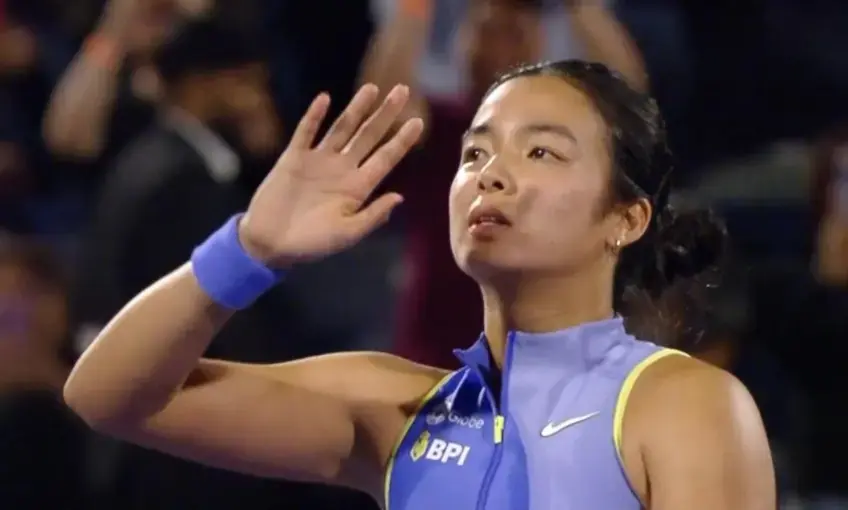
Fighting back tears, Eala thanked PHILTA, her sponsors, and Filipino fans around the world. She said the gesture strengthened her resolve to compete with integrity and passion, especially during moments of adversity that test an athlete’s character.
“I play for the flag,” she reportedly said, her voice steady but soft. “This support reminds me that I am never alone on the court.” Her words resonated far beyond Manila, circulating rapidly across social media platforms and international sports networks.
Within minutes, hashtags celebrating Eala began trending across the Philippines. Fellow athletes, government officials, and global tennis commentators praised the unprecedented scale of the commitment. Many described it as a transformative model for athlete development in emerging tennis nations.
Economic experts also weighed in, noting the potential ripple effect on youth sports investment. A guaranteed lifetime sponsorship for a female tennis player signals shifting priorities in regional funding, where corporate stakeholders increasingly recognize the commercial and cultural value of women’s sport.
For young Filipino players training in provincial academies, today’s announcement carries symbolic weight. It suggests that world-class dreams can be supported at home, without relying solely on overseas funding structures. PHILTA’s bold strategy may reshape talent pathways for years to come.
International observers are equally intrigued. Rarely does a national federation create a lifetime ambassadorial title tied directly to an active athlete. The combination of financial security and symbolic honor positions Eala as both competitor and enduring national representative.
As the press conference concluded, Olivarez reiterated his belief that Eala’s best years are still ahead. He framed the sponsorship not as a reward for past achievements, but as a foundation for future Grand Slam campaigns and sustained global presence.
Whether viewed as a strategic response to controversy or a visionary investment in excellence, the decision marks a historic chapter for Philippine tennis. One thing is clear: Alexandra Eala’s journey has entered a powerful new era, backed by unwavering national belief and unprecedented support.