
Her confession spread rapidly through the crowd, leaving fans and insiders questioning what had gone wrong in a race that once seemed routine, yet suddenly carried the weight of something far deeper than a simple loss or miscalculation today perhaps.
For years, Doyle had built a reputation as one of the most disciplined and passionate jockeys in the sport, known for her sharp instincts, relentless work ethic, and deep connection with every horse she rode across some of racing’s most prestigious stages.
That is why the shock felt so profound when whispers began to circulate about decisions made behind the scenes, choices that hinted at pressures and influences far removed from the purity and tradition that horse racing has long tried to uphold.
As the race unfolded, nothing initially seemed out of the ordinary, with Doyle guiding her trusted mount through the early stages with precision, positioning carefully among competitors while spectators watched with anticipation for another display of her signature composure and skill.
However, subtle signs of hesitation began to emerge in the final stretch, moments that seasoned observers later described as uncharacteristic, suggesting that something unseen was weighing heavily on her judgment during those crucial seconds where instinct usually takes control.

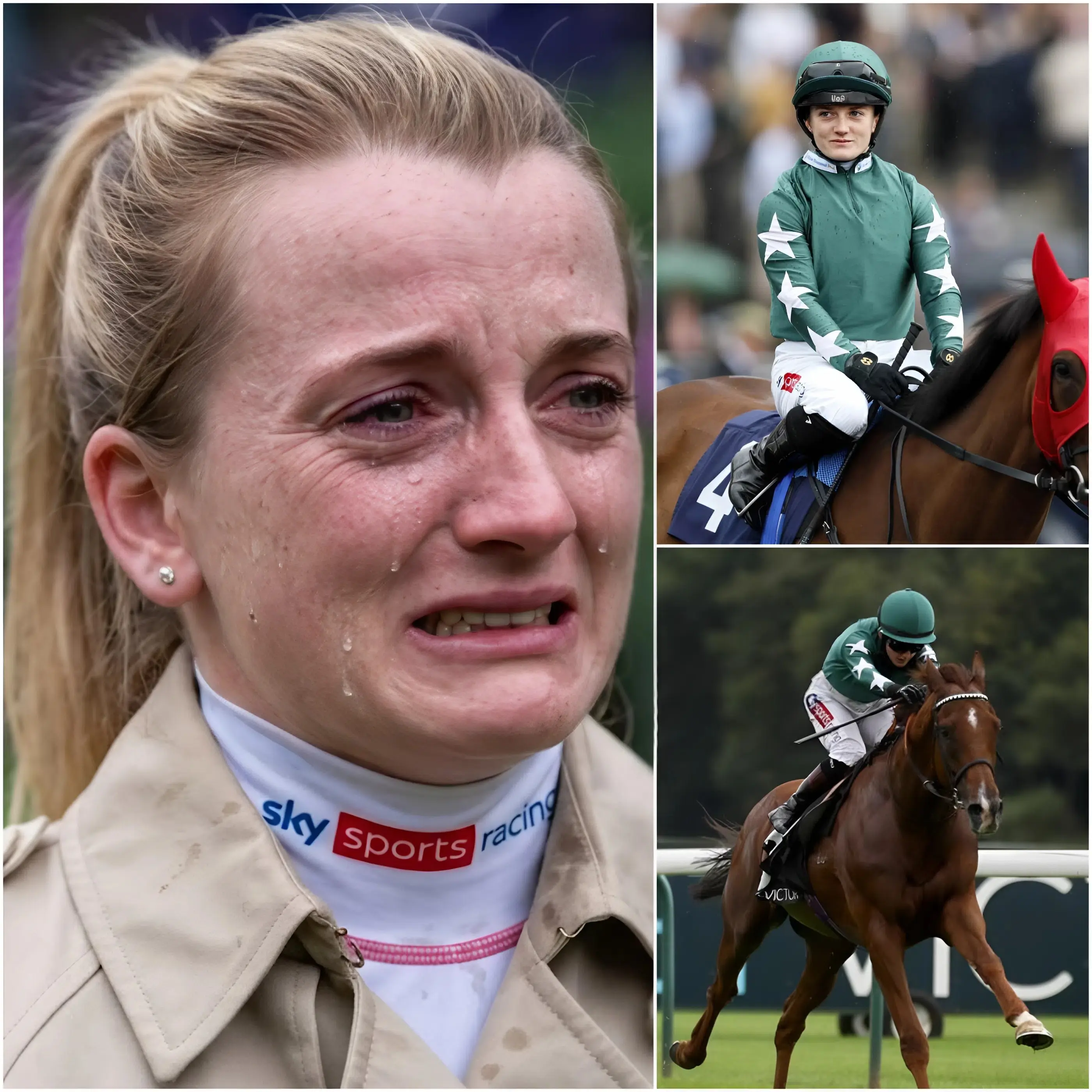
When the finish line finally approached, the outcome felt almost secondary compared to the tension that had built, as Doyle slowed and dismounted with an expression that revealed not just disappointment, but a deeper sense of realization beginning to take hold.
It was in that moment, surrounded by flashing cameras and murmuring voices, that she uttered words that would echo far beyond Ascot, describing her decision as the greatest mistake of her life, a statement that immediately drew intense attention and speculation.
While she did not initially provide full details, her reference to misplaced trust hinted at a complicated situation involving agreements and expectations that may have influenced her actions in ways she now deeply regretted under the unforgiving spotlight of professional racing.
Those close to the sport understand how high the stakes can become, with financial incentives, sponsorship pressures, and competitive rivalries sometimes creating an environment where even experienced athletes face difficult choices that test their integrity and long-held values.
For Doyle, the emotional weight appeared especially heavy because of her bond with the horse she rode that day, an animal she had trained with extensively, forming a partnership built on trust that many believe defines the essence of true horsemanship.

Observers noted that her interaction with the horse after the race was unusually subdued, lacking the familiar gestures of gratitude and connection, which only reinforced the perception that she felt she had let down not just herself, but a loyal companion.
The idea of a “phantom contract,” as some have described it, added another layer of intrigue, suggesting the possibility of arrangements that exist in gray areas, where formal agreements may not fully capture the pressures or expectations placed upon athletes.
Such situations, whether real or exaggerated through rumor, often highlight broader concerns within competitive industries, where success can sometimes come at the cost of transparency, leaving individuals to navigate complex dynamics that are not always visible to the public eye.
As the story continued to unfold, reactions from fans ranged from sympathy to disappointment, reflecting the complicated emotions that arise when a respected figure admits to an error that challenges the image they have carefully built over time.
Many supporters emphasized her past achievements and resilience, arguing that one moment, however serious, should not entirely define a career that has inspired countless aspiring riders and brought excitement to audiences around the world.
At the same time, critics pointed out that professional sports demand accountability, especially when decisions have the potential to impact not only outcomes, but also the fairness and credibility that competitions rely on to maintain public trust.
Doyle’s own words suggested she understood this tension, as she spoke not in defense of her actions, but in acknowledgment of the consequences, expressing a sense of regret that seemed rooted in a deeper reflection on her personal values.
The image of her standing at the finish line, visibly emotional, quickly became symbolic of the moment, capturing the intersection between triumph and vulnerability that defines so many pivotal turning points in an athlete’s journey.
Experts in the field have since weighed in, noting that high-pressure environments can sometimes cloud judgment, particularly when external influences intersect with internal ambition, creating scenarios where even the most experienced professionals can falter unexpectedly.
Yet what sets this moment apart is the openness of her admission, choosing to confront the situation publicly rather than deflect or remain silent, a decision that carries its own risks but also signals a willingness to face difficult truths.

As investigations and discussions continue, the long-term impact on her career remains uncertain, with questions surrounding potential consequences, future opportunities, and whether she can rebuild the trust that has been shaken by recent events.
History has shown that comebacks are possible, but they often require not just performance, but also transparency and consistency over time, elements that will likely shape how this chapter of her story is ultimately remembered.
For now, the focus remains on the lessons drawn from this incident, both for Doyle herself and for the wider racing community, as it reflects the ongoing challenge of balancing ambition, integrity, and the complex realities of modern professional sport.
Whether this moment becomes a permanent scar or a turning point toward redemption will depend on what comes next, but its impact is already undeniable, leaving a lasting impression on everyone who witnessed that emotional scene at Ascot.