
“I don’t compromise!” » Jonas Vingegaard’s words resonated like an explosion in the world of cycling. A few minutes before the start of Paris-Nice 2026, a simple clothing question turned into an unexpected media storm.
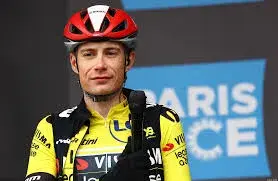
According to several witnesses present in the technical zone, the organizers had planned a special outfit to mark an inclusive campaign. The riders had to wear a symbolic jersey during the presentation of the teams before the inaugural stage.
The majority of teams accepted without discussion. For the organizers, it was a symbolic gesture aimed at promoting social values and openness. However, when the jersey was presented to Jonas Vingegaard, the Danish champion’s reaction was immediate.
According to several journalists present backstage, Vingegaard categorically refused to wear the outfit. He reportedly explained that cycling should remain focused solely on competition and not on social or political messages.
“I don’t compromise,” he is said to have declared firmly to race officials. His sentence, captured by several microphones, quickly circulated among the media present, triggering a flood of reactions on social networks.
Some fans supported the rider’s right to express his opinion. Others considered his attitude provocative and inappropriate in a context where sport often seeks to promote values of inclusion and respect.
But the situation took on an even more explosive dimension when Vingegaard allegedly added that, in his opinion, cycling was “corrupted” by social messages imposed on riders without any real debate.
These words immediately triggered a wave of reactions in the peloton. Several runners said they were shocked by the statement, believing that sport could perfectly defend values without harming competition.
Less than an hour later, a petition was already circulating in the paddock. According to several sources, several professional runners would have signed a document calling for a symbolic boycott if the situation was not clarified.
The atmosphere around the departure from Paris-Nice quickly became tense. Lively discussions broke out between team members, race officials and journalists seeking to understand what was really happening.
Then a new element came to fuel the controversy. Five minutes before the official departure, an audio recording mysteriously leaked on social networks, causing an even stronger shock wave.
In this recording, we can hear a heated altercation between Jonas Vingegaard and several organizers. The voices sound agitated, and some sentences indicate a particularly tense exchange over the controversial outfit.
Although the authenticity of the audio has not been officially confirmed, it was shared thousands of times within minutes. The sports commentators immediately began analyzing every word heard.
In the recording, a voice attributed to an organizer insisted on the compulsory nature of the jersey for the protocol ceremony. Vingegaard reportedly responded that he refused to participate in what he considered to be instrumentalization.
The discussion then seems to become more aggressive. At one point, a male voice states that refusing the outfit could result in disciplinary consequences for the runner and potentially for his team.
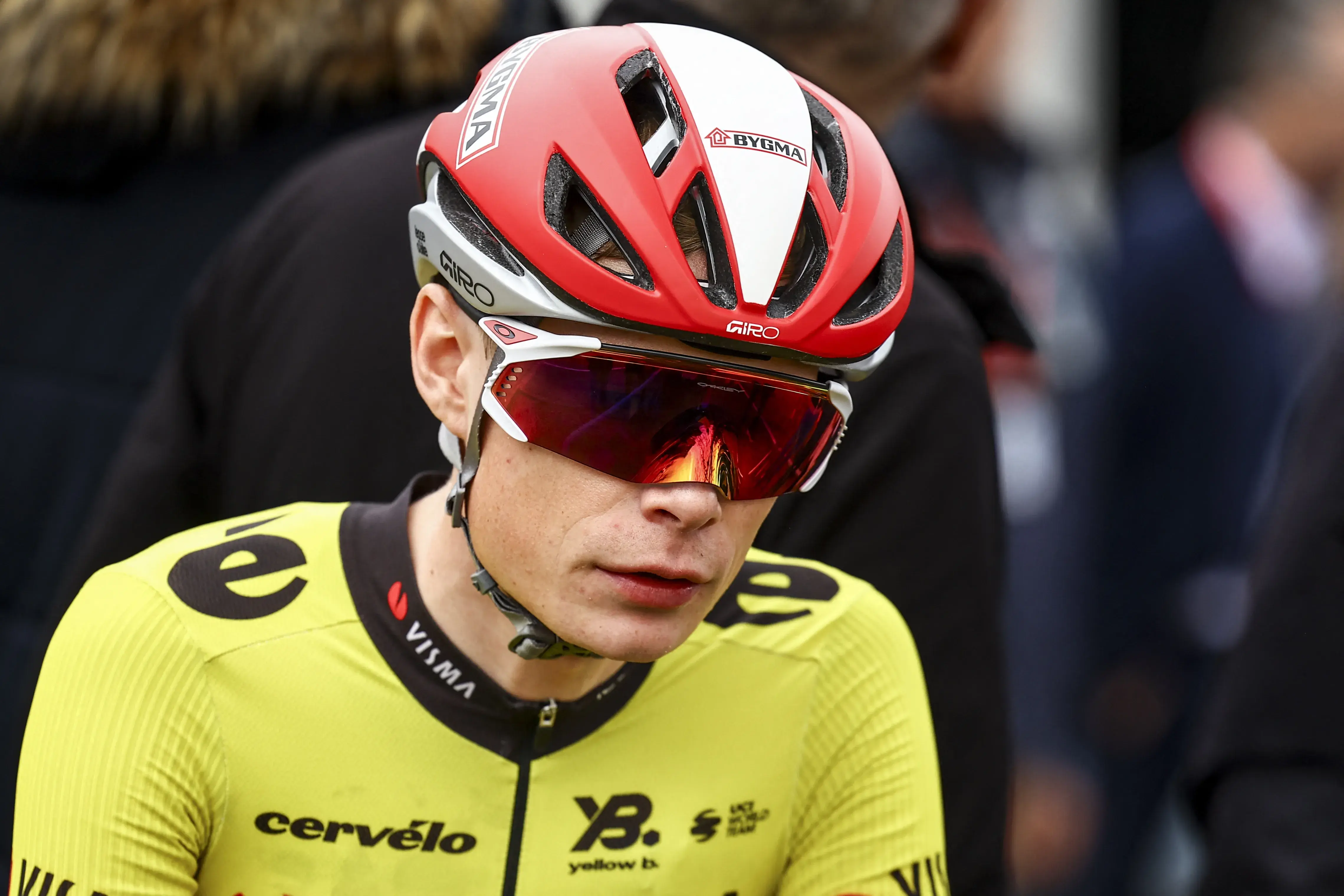
Vingegaard then replied that no one could force him to carry a message that he did not share. This sentence, if authentic, sums up the heart of the conflict that erupted that morning.
Meanwhile, the crowd gathered around the starting line began to sense the tension. Rumors circulated quickly among spectators and journalists present on site.
When Vingegaard finally appeared on the starting area, some spectators applauded. But others began to boo him, a sign that the controversy had already spread beyond the scenes.
Television cameras captured these contrasting reactions. On social networks, images of the public divided between applause and boos immediately went around the world.
Faced with growing media pressure, the rider’s team management held an emergency meeting. Several managers reportedly felt that the situation risked seriously harming the team’s image.
According to information from inside the team, a radical decision was considered. Managers reportedly threatened to fire Vingegaard if he did not publicly apologize within twenty-four hours.
Such a move would be completely unprecedented for a champion of this level. Vingegaard is considered one of the most respected riders in the peloton and a major figure in modern cycling.
However, the media and commercial pressure weighing on professional teams is enormous. Sponsors closely monitor any controversy that could affect their public image.
In this explosive context, the journalists tried to obtain a reaction from the Danish runner. But for several hours, Jonas Vingegaard remained silent, refusing any interview or official statement.
This silence fueled speculation. Some thought he was preparing excuses to calm the situation. Others imagined, on the contrary, that he would defend his position even more firmly.
At the end of the afternoon, a brief press release from his team was finally published. The message simply stated that the rider would speak in the following hours to clarify his position.
Media anticipation has become intense. Sports channels have started preparing special shows to analyze the possible consequences of this controversy on the cycling season.
When Jonas Vingegaard finally appeared in front of a few journalists, the atmosphere was electric. Questions immediately arose regarding the jersey, the audio recording and the threat of sanction.
The Danish rider remained calm for several seconds before responding. His serious look and calm tone contrasted sharply with the media agitation surrounding the affair.
Puis il a prononcé une phrase très courte. A sentence consisting of only seven words, which immediately plunged the room into total silence.
“I respect everyone, but I remain free. »
These seven words left the journalists without reaction for a few moments. Some quickly understood that the response constituted neither an apology nor a real provocation.
On the contrary, Vingegaard seemed to want to assert a personal position while avoiding direct confrontation. Une stratégie qui pourrait calmer certains critiques tout en maintenant ses convictions.
The controversy, however, is far from over. Paris-Nice organizers have yet to decide whether they will take disciplinary action or consider the incident closed.
In the peloton, opinions remain deeply divided. Some riders believe that Vingegaard simply exercised his personal freedom. Others believe his position risks encouraging new tensions.
One thing is certain: this controversy will remain as one of the most unexpected moments of the 2026 edition of Paris-Nice.
And for Jonas Vingegaard, these seven words could well mark a decisive turning point in his relationship with the world of professional cycling.