
A Quiet Afternoon, a Broken Cart, and a Gesture That Changed Everything
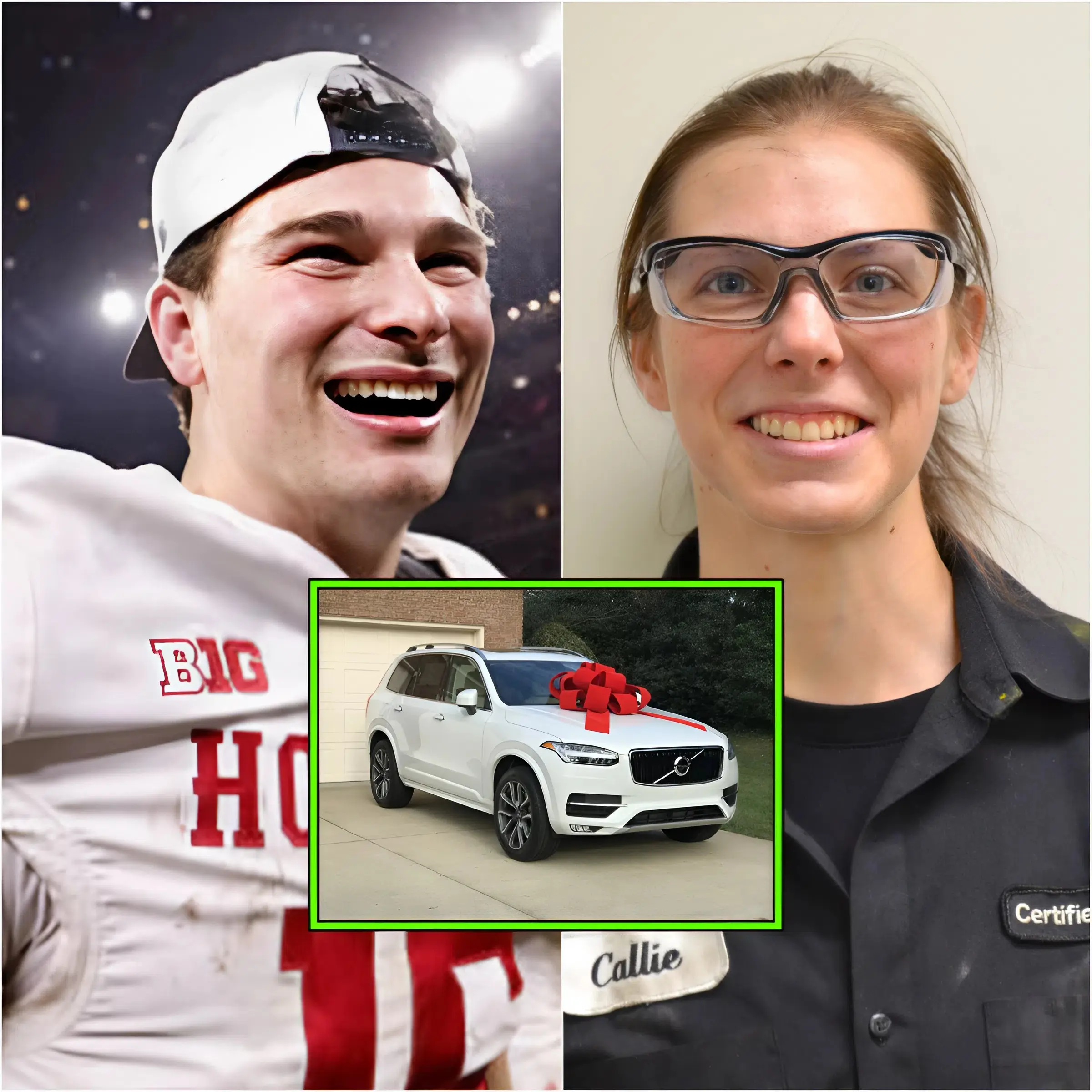
For most people working behind the scenes in college athletics, days blend together quietly. The work is physical, repetitive, and rarely noticed. There are no cameras, no applause, and no headlines waiting at the end of a shift. For Maria Thompson, that had always been the reality.
Maria worked in maintenance at a college football facility where long hours and modest pay were simply part of the job. She arrived early, stayed late, and took pride in keeping the grounds and equipment ready for athletes who carried far bigger dreams than her own.
Life, as she often said, had never been easy—but it was honest.
One ordinary afternoon, everything changed.
While making her rounds near the practice area, Maria noticed a utility cart stalled near the edge of the lot. Standing beside it was Fernando Mendoza, a young NCAA football player whose name had already begun circulating in conversations about the NFL.
To Maria, however, he was just another athlete dealing with a small problem on a busy day.
Without hesitation, she offered to help.
Using tools she had carried for years, Maria examined the cart and quickly identified the issue. It wasn’t complicated, but it required patience. Fernando stayed nearby, listening, asking questions, and thanking her repeatedly.
There were no cameras, no assistants rushing in—just a brief, human interaction between two people from very different worlds.
When the cart finally started, Fernando smiled, shook her hand, and thanked her again before heading off to practice.
Maria thought nothing more of it.
That evening, she returned home to the same routines she had always known. Bills on the counter. Worries she carried quietly. The kind of life that demands resilience without ever promising relief.
The next morning, however, something unexpected waited outside her door.
Parked neatly at the curb was a white pickup truck—new, clean, and unmistakably out of place on her quiet street. At first, Maria thought there must be a mistake. Perhaps a neighbor had visitors. Perhaps it was parked there temporarily.
Then she saw the note.

The message was brief and handwritten. It thanked her for her kindness, her help, and her willingness to stop and assist without being asked. It spoke about respect, about never forgetting where you come from, and about recognizing the people who keep everything running when no one is watching.
The signature at the bottom read: Fernando.
Maria stood frozen.
According to people familiar with the situation, Fernando had asked questions after practice. Not about drills or film—but about the woman who helped him. He learned about her job, her commute, and the challenges she faced simply trying to get by.
What struck him most, those close to him say, was that she never complained. She just helped.
What followed was not a publicity stunt. There was no announcement, no social media post, no press release. The gesture was intentional in its silence.
For Maria, the truck represented more than transportation. It was relief. Stability. A reminder that her work mattered, even when it felt invisible.
“I didn’t do anything special,” she later told a colleague. “I just did my job.”
That humility only deepened the impact of the story as it quietly began to spread.
Within days, word reached the facility. Coaches, staff members, and teammates spoke not about the vehicle, but about what it represented. In a sports world increasingly defined by contracts, rankings, and projections, the moment cut through with something simpler: gratitude.
Fernando Mendoza has never been known as the loudest voice in the room. Teammates describe him as focused, disciplined, and respectful. Coaches praise his work ethic and composure. Those traits, it seems, extend beyond the field.
At a time when young athletes face enormous pressure—expectations, scrutiny, and constant evaluation—Fernando’s gesture served as a reminder that character still matters. That success does not erase responsibility. And that small acts, done quietly, can resonate louder than any celebration.
Maria, meanwhile, returned to work.
She didn’t ask for interviews. She didn’t seek attention. She parked the truck and showed up the next day like she always had. The difference was not in how others saw her, but in how she felt.
For the first time in a long while, the weight felt lighter.
Colleagues noticed the change. A smile that lingered longer. A sense of dignity affirmed. Not because she had been rescued—but because she had been seen.

In the broader context of college football, the story landed softly but powerfully. It wasn’t about money, NIL deals, or draft projections. It was about a moment when two paths crossed, briefly and unexpectedly, and one person chose to respond with generosity instead of indifference.
There are countless Maria Thompsons working in stadiums, facilities, and campuses across the country. Their names rarely appear on rosters. Their contributions are rarely highlighted. Yet without them, the system would stop.
Fernando Mendoza understood that.
And perhaps that is why the gesture resonated so deeply. Not because it was extravagant—but because it was intentional, personal, and private.
No cameras. No sponsors. No headlines waiting outside.
Just a broken cart, a helping hand, and a quiet decision to give something back.
For Maria, life did not suddenly become perfect. Challenges remain. But something fundamental shifted: the knowledge that kindness travels farther than we expect, and that sometimes, doing your job with care can open a door you never imagined.
And for Fernando Mendoza, the moment may never appear on a stat sheet—but those who know the story say it revealed something just as important as talent.
It revealed who he is when no one is watching.